Tea fixation (shaqing) is the critical first step in tea processing that stops enzymatic oxidation, locks in fresh aroma, and shapes the final flavor profile. The heating source of the fixation machine directly impacts temperature stability, heating uniformity, and even the unique characteristics of the tea. DELI ASSISTANT, a leading manufacturer of tea machinery, offers three mainstream heating types—gas, electric, and wood/coal—each tailored to different production needs and tea quality requirements. Let’s dive into their differences, typical models, and selection guidelines to help you make the best choice.
1. Gas-Heated Tea Fixation Machines
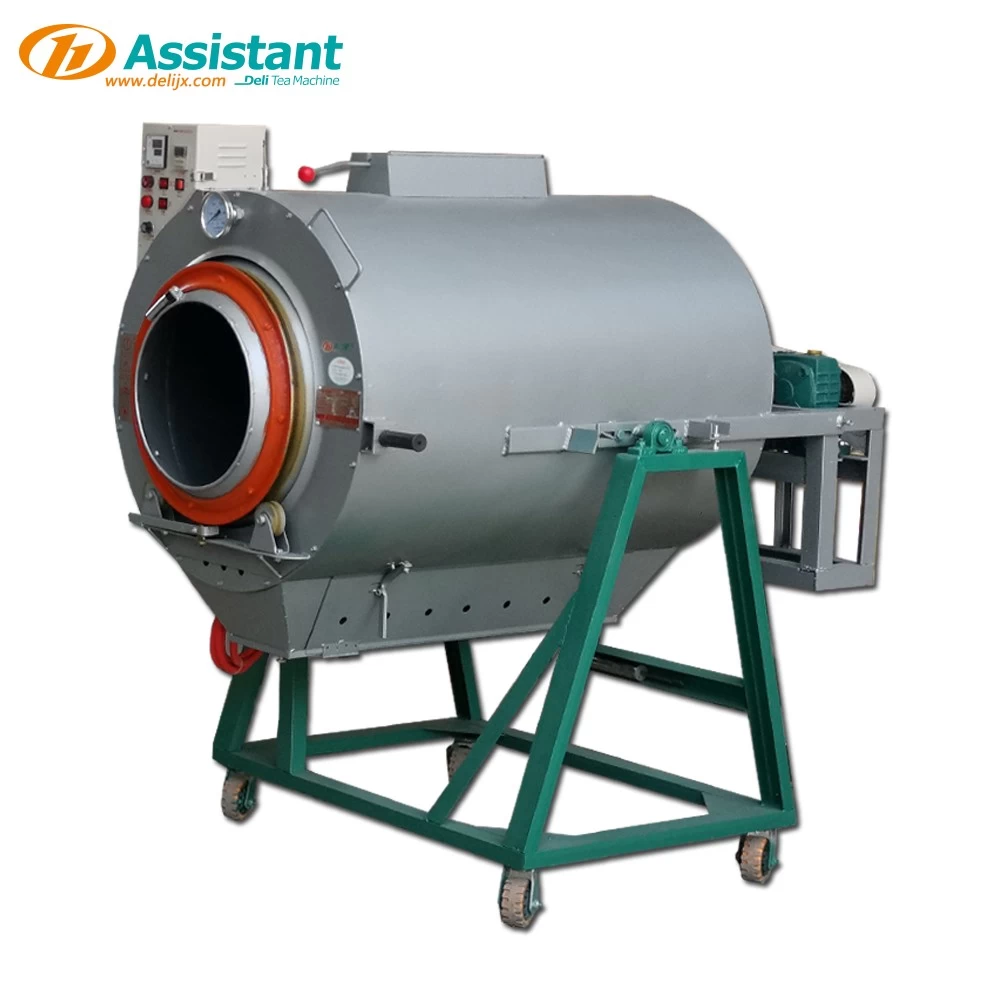
Core Advantages for Tea Quality
-
Stable & efficient heating: Provides continuous, uniform heat output, avoiding local overheating or under-fixation that ruins tea freshness.
-
Controllable temperature: Adjustable heat intensity adapts to various teas (e.g., oolong, black tea) and batch sizes.
-
Clean & low-residue: No smoke or ash contamination, ensuring the tea’s pure aroma and clean taste.
-
High production capacity: Ideal for medium to large tea factories with consistent output demands.
| Parameter |
Specification |
| Capacity |
50 kg/hour |
| Drum Diameter |
700 mm |
| Drum Length |
1000 mm |
| Voltage |
220V 50Hz |
| Heating Fuel |
Natural Gas / LPG |
| Inner Drum Material |
Carbon Steel (Optional Stainless Steel) |
| Drum Speed |
5-37 rpm |
2. Electric-Heated Tea Fixation Machines
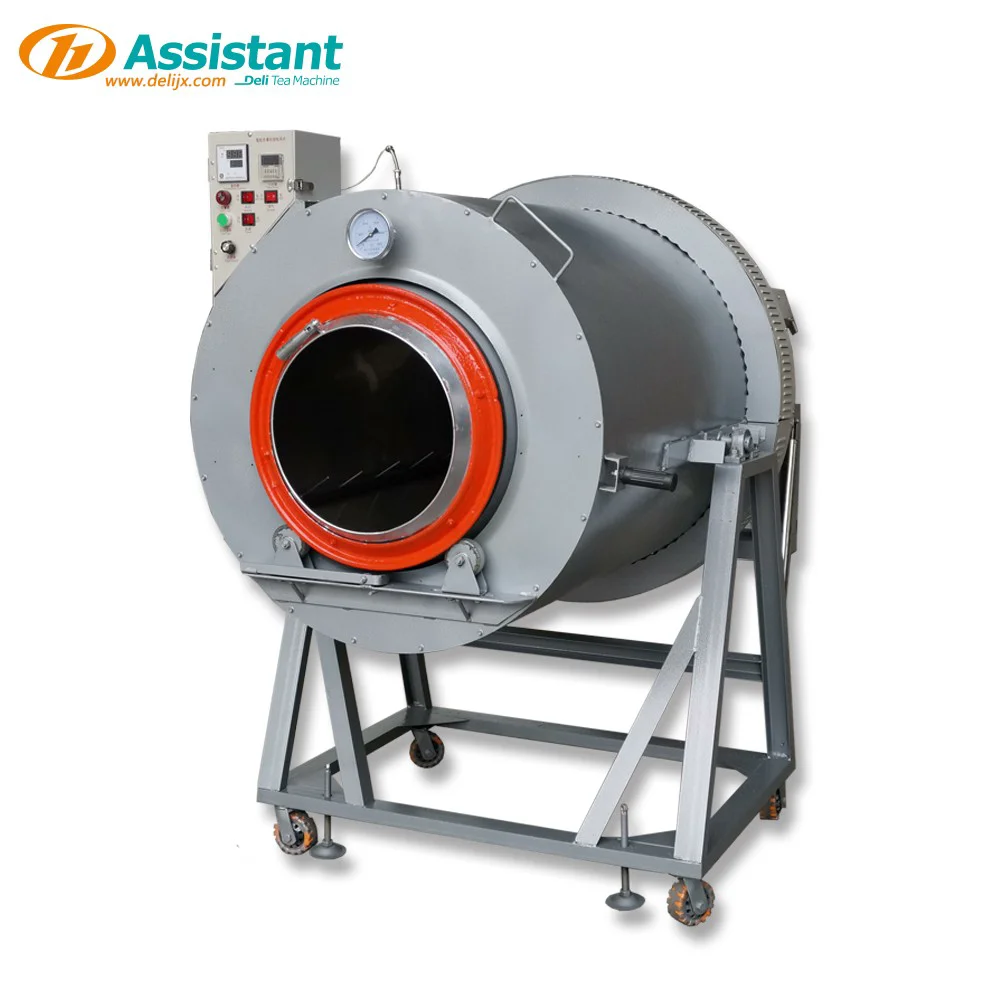
Core Advantages for Tea Quality
-
Precision temperature control: Digital adjustment with ±1℃ accuracy, perfect for teas requiring strict temperature management (e.g., green tea, high-end white tea).
-
Instant heating & energy-saving: Rapid startup without preheating, low energy consumption, and environmental friendliness (zero emissions).
-
Gentle heat distribution: Even heat penetration preserves the tea’s delicate nutrients and fresh flavor.
-
Compact & easy to maintain: Suitable for small to medium factories or workshops with limited space.
| Parameter |
Specification |
| Capacity |
50 kg/hour |
| Drum Diameter |
700 mm |
| Drum Length |
1000 mm |
| Voltage |
380V 50Hz |
| Heating Power |
24 KW |
| Inner Drum Material |
Stainless Steel (Optional Full SS) |
| Drum Speed |
5-37 rpm |
3. Wood/Coal-Heated Tea Fixation Machines

Core Advantages for Tea Quality
-
Unique smoky aroma: Imparts a natural, mellow smoky flavor to tea, a signature of traditional craft teas (e.g., aged oolong, dark tea).
-
Cost-effective fuel: Uses readily available biomass fuels (wood, coal, wood pellets) with low operating costs.
-
High heat intensity: Fast heating rate, suitable for heavy-oxidation teas that require rapid enzyme inactivation.
-
Cultural heritage preservation: Follows traditional processing methods, appealing to consumers seeking authentic craft tea.
| Parameter |
Specification |
| Capacity |
35 kg/batch |
| Drum Diameter |
1100 mm |
| Drum Length |
1000 mm |
| Voltage |
220/380V 50Hz |
| Heating Fuel |
Wood / Coal / Wood Pellets |
| Inner Drum Material |
Carbon Steel (Optional Cast Iron) |
| Drum Speed |
5-37 rpm |
Key Comparison Table
| Feature |
Gas-Heated |
Electric-Heated |
Wood/Coal-Heated |
| Temperature Control |
Good (±5℃) |
Excellent (±1℃) |
Basic (Manual adjustment) |
| Tea Aroma |
Pure & Fresh |
Delicate & Clean |
Smoky & Mellow |
| Production Capacity |
Medium-Large (25-150 kg/h) |
Small-Medium (25-50 kg/h) |
Medium (35-45 kg/batch) |
| Environmental Impact |
Low emission |
Zero emission |
High emission (Needs filtration) |
| Operating Cost |
Moderate |
Moderate-High |
Low |
| Suitable Tea Types |
Oolong, Black Tea |
Green Tea, High-end White Tea |
Traditional Oolong, Dark Tea |
How to Choose for Tea Quality
-
Prioritize flavor characteristics: Choose wood/coal heating for traditional smoky teas, electric heating for fresh and delicate teas, and gas heating for balanced, pure-flavor teas.
-
Match production scale: Small workshops (≤50 kg/h) fit electric models; medium-large factories (≥80 kg/h) benefit from gas or continuous wood/coal models.
-
Consider environmental regulations: Electric or gas models are preferred in areas with strict emission limits; wood/coal models require additional dust removal equipment.
-
Focus on tea grade: High-end teas demand electric or gas models for precision; bulk teas can use cost-effective wood/coal models.